
Air Force Downplays Predator Virus
Malware Reportedly Isolated, Removed
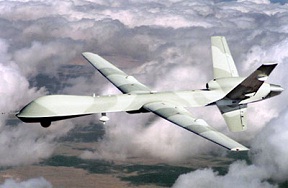
It really doesn't get much scarier than a virus affecting the system used by the U.S. Air Force base to carry out missions with its Predator drone. A few weeks ago, the U.S. Air Force was forced to admit that that's exactly what had happened, but in recent days has emphasized that the problem has been taken care of and poses no immediate danger to national security.
Back in mid-September, the Air Force revealed that it had discovered malware on portable hard drives used at the Creech Air Force Base in Clark, County, Nevada, USA. For those who don't know, Creech is the main base for the country's Predator drone program, whereby unmanned flying weapons are guided thousands of miles from the battlefield by trained specialists.
When news of the infection first broke, reports suggested that the malware was a keylogger, which tracks every single key stroke entered into a system and can be used to crack log-ins and break passwords. This startled the media and many folks following the story, since the mere idea of someone breaking through Air Force security and remotely controlling the Predator system is frightening, to say the least.
In recent days the Air Force has dismissed these fears, as well as early reports that the malware was a keylogger. Instead, the Air Force says it was a credential stealer, which doesn't necessarily sound any less dangerous, but is in fact easier to remove. The Air Force also said that the problem was limited to isolated Windows machines in the network, meaning that the problem was easily isolated and removed with the help of fairly standard security tools.
In the end, the problem was little more than a "nuisance," the Air Force says. "Control of our remotely piloted aircraft was never in question," said Air Force Space Command's colonel Kathleen Cook.
Cook added that the Air Force was not being complacent on the issue and was continuing to investigate the issue towards improving overall security. "We continue to strengthen our cyber defenses using the latest anti-virus software and other methods to protect Air Force resources and assure our ability to execute Air Force missions," Cook said.


Comments (0)