
Elderly Read iPad Easier Than Traditional Books, Study Finds
Findings Dismiss Myths About Electronic Reading
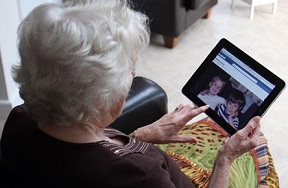
Just in case Apple, owner of the most prolific marketing campaigns in tech history, needed a sales boost for its ubiquitous iPad tablet computer, word now comes that elderly people are able to read text off an iPad much faster than a traditional book.
The study comes to us from the Johannes Gutenberg University Mainz, located in Germany. Researchers set out to discover if there were any real-world negative effects associated with reading off an electronic display rather than a "real" book. One question that they seemed quite preoccupied with was 'is reading from a screen better or worse for us?'
"E-books and e-readers are playing an increasingly important role on the worldwide book market," researchers said. "However, readers can be particularly sceptical when it comes to e-books and electronic reading devices. The objective of the study was to investigate whether there are reasons for this scepticism."
Their findings are quite startling. First, they discovered that elderly people read off an iPad approximately three times faster than a traditional book. Researchers also found that e-readers, for some reason, don't offer the same speed boost, but at the same time, don't hurt reading speed, either. In fact, the study found that elderly people read e-readers, like Amazon's Kindle or Barnes & Noble's Nook, at about the same rate they read a regular, old book.
One last interesting tidbit of information: young people read electronic and physical text at about the same pace; for someone under the age of 30, they don't read a tablet computer or e-reader any differently than a standard book.
The research team's leader, Professor Stephan Fussel, believes the study provides us with substantial proof that electronic readers help, rather than hinder, reading. "The objective of the study was to investigate whether there are reasons for…scepticism," Fussel said. "This study provides us with a scientific basis for dispelling the misconception that reading from a screen has negative effects."
Surprisingly, most participants in the study reported that they still preferred to read a traditional book, even if the new-fangled iPad provided a faster reading experience.


Comments (0)