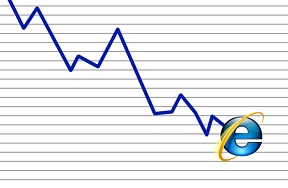

Internet Explorer’s Market Share Continues to Slide
Google’s Chrome Makes Impressive Gains
According to a new report, the percentage of web users employing Microsoft's once ubiquitous Internet Explorer browser will dip below 50 per cent in the next year, representing an alarming low point for the Redmond-based firm.
At one time Internet Explorer was the world's pre-eminent web browser. It was slick, it was easy-to-use, and -- this is critical to understanding its widespread popularity -- it shipped right inside the Windows operating system (OS) package, making browsing a one-step affair upon buying a new Windows PC.
Of course, a few major developments in the past few years have whittled away Microsoft's once commanding market dominance. For one, new and equally appealing browsers have emerged from several competitors, most notably Mozilla (Firefox), Google (Chrome) and Apple (Safari). In some cases these browsers not only matched Internet Explorer in terms of performance, but even beat it. Beyond that, browsers like Firefox have gained a reputation for being a more secure choice than Internet Explorer.
The second major knock against Internet Explorer has been new pressure placed on Microsoft to stop shipping Windows with a single browser inside. Last year Microsoft began unveiling new Windows PCs with a browser ballot, offering users the choice of a variety of popular options.
A third problem is that the newest version of Internet Explorer, IE9, is available only to Windows Vista and Windows 7 users. Given that there are still billions of Windows XP users out there, the freshest (and safest) edition of the browser just isn't available to all.
Given these developments, it's not a particularly huge surprise to see Internet Explorer's popularity steadily decline. The newest and most stunning report on the subject comes from industry analysts at Net Applications, who say that Microsoft has lost an astounding five per cent of the overall browser market in just the last ten months. Much of that market share has gone to Google and its Chrome browser, which gained about six per cent over that same period.
Beyond that finding, Net Applications also went so far as to predict that Internet Explorer will be used by less than 50 per cent of all web users in May of 2012, a low point Microsoft hasn't seen in years.
As for the competition, Safari also increased in popularity, although its gains remain modest, to say the least. At a crossroads right now is Mozilla, whose Firefox browser has remained almost totally stagnant over the past year.


Comments (1)