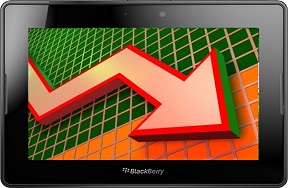

U.S. Retailers Cut Price of RIM PlayBook Tablet
RIM Reportedly Selling Device at a Loss
The downward spiral of the PlayBook tablet computer, built by Waterloo, Canada's Research in Motion (RIM), continues. Retailers in the U.S. have now dramatically cut the price of the tablet and it now appears RIM is losing money on every device sold.
When it launched in April of this year, expectations were relatively high for the PlayBook. It featured lots of integration with RIM's very popular BlackBerry smartphone and a slick little interface. Although RIM never publicly said how many PlayBooks it expected to sell within twelve months, insider reports suggest it hoped the number would be close to five million units.
In its first three months of availability, the PlayBook sold 500,000 times. Since then, RIM has sold only 200,000 PlayBooks, meaning the company is way, way off the pace.
But that's not the only good reason for retailers to drop the price of the PlayBook. Not long ago Amazon revealed its $199 Kindle Fire tablet, an unveiling that was followed shortly thereafter with news that Barnes & Noble would release a similar device, the Nook tablet, for just $249. We've seen news outlets pay lots of attention to these devices, reducing the amount of interest generated by the PlayBook.
Given all these factors, it's no surprise that the PlayBook's price has now been cut all the way down to $199 (16GB version). That's a reduction of $300 from the device's original price. Experts who've studied the PlayBook's internal parts and estimated their value say RIM is now losing money on every PlayBook sold.
Surprisingly, no one thinks RIM is about to walk away from the PlayBook. First of all, it was only a month ago that RIM co-CEO Jim Balsille declared his full support for the device. Then there was a company announcement in September that the firm would offer incentives to potential buyers throughout the holiday season.
So, is the price cut going to revive interest in the PlayBook? Perhaps, but only temporarily. The device's main draw continues to be its integration with the BlackBerry smartphone, and if you don't own a BlackBerry then there's little reason to buy a PlayBook over an Apple iPad or Amazon Kindle Fire. Unless you're addicted to that CrackBerry, it's unlikely a much cheaper PlayBook is going to look any more appealing than before.


Comments (0)