
Windows 8 Previewed at California Developer Conference
Tablet Integration a Key Theme for Upcoming OS
Developers attending this week's Anaheim-based, Microsoft-hosted BUILD conference got their first look at Windows 8 on Tuesday and it's looking mighty different from Windows 7. The major difference? A very obvious effort to expand beyond the PC to the tablet computer.
There's no denying that Windows 7 has been a smash hit for Microsoft. Ever since its release about a year ago, reviews by consumers and critics alike have been overwhelmingly positive. But the emergence of new technologies in just the past year -- in particular, the tablet computer -- has forced the Redmond-based firm to look elsewhere for inspiration when designing its next operating system, due sometime in 2012.
So, don't expect a few slight updates when Windows 8 finally ships. As Microsoft emphasized on Tuesday, this was intended to be a major re-tooling of the operating system (OS) from the get-go. "We reimagined Windows," said Microsoft Windows unit President, Stephen Sinofsky. "From the chipset to the user experience, Windows 8 brings a new range of capabilities without compromise."
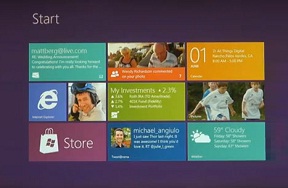
So, what's so different about Windows 8? The most obvious change is the software's attempt to reach beyond the standard laptop and desktop and embrace the tablet computer. Nothing demonstrates this better than the way Microsoft borrows the Live Tiles blocks-based navigation system seen in the Windows Phone 7 mobile platform. With Live Tiles, touch sensitive interactive boxes can be used for access to all kinds of information, including email, social networking, instant messaging, etc.
Clearly, this kind of touch-based interactivity is ideal for a company looking to branch out into a vibrant, burgeoning but extremely challenging tablet market. To date Apple has owned this niche industry, a fact highlighted by Hewlett-Packard's recent decision to exit the market and mark down its remaining TouchPad units to just $99.
Microsoft says it plans to update the Metro interface for Windows 8, but it refuses to apologize for borrowing so much from its mobile platform, Windows Phone 7. "Windows 8 introduces a new Metro-style interface built for touch, which shows information important to you, embodies simplicity, and gives you control," Microsoft announced. "The Metro style UI is equally at home with a mouse and keyboard as well."
Beyond getting a closer look at the Metro interface, developers were also told that their languages of choice -- HTML5/Javascript, C/C++, and C#/XAML -- would all be supported. It's all part of an effort to make Metro and Windows 8 more flexible for developers, luring them away from alternative platforms offered by Google or Apple.
"The investments you have made as developers in all of these languages carry forward for Windows 8, which lets you choose how to best make use of the Windows 8 system services," Sinofsky said. "We talked about Windows 8 being a no-compromise OS for end-users, and it is also a no-compromise platform for developers."


Comments (0)